In the interconnected world, where data is paramount, the demand for faster and more efficient communication channels has become unprecedentedly urgent. High speed copper cables are crucial for equipment collaboration in data centers, seamless transmission of high-definition content in consumer electronics, high-speed interconnection of communication networks, and even linkage of automotive electronic systems. From the perspective of the stock market, since the beginning of 2025, many concept stocks in the copper cable high-speed connection (i.e. "high-speed copper cable") sector have shown significant gains.
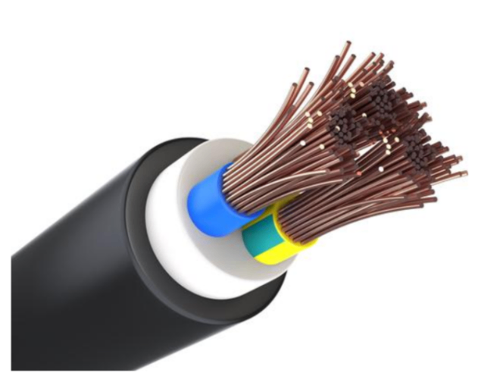
At the 17th Toem Forum held recently, two industry experts gave wonderful reports on high-speed copper cable related technologies and prospects.
According to authoritative predictions, the global high-speed copper cable market is expected to grow at an annual rate of up to 25% from 2023 to 2027, and the shipment volume is expected to hit 20 million by the end of 2027. According to the China Commerce Industry Research Institute, the scale of China's high-speed copper cable industry is expected to exceed 10 billion yuan by 2025 and 20 billion yuan by 2028.
The typical applications of high-speed copper wire include high-speed parallel wires, RF coaxial cables, HDMI cables, USB cables, automotive high-speed Ethernet harnesses, and many others.
High speed parallel cables are mainly used in data center cabinets, such as Nvidia's release of the GB200 supercomputer and NVL72 cabinet at the 2024 GTC conference. 72 Nvidia B200s are combined into a "super GPU" through NVLINK 5, and interconnected through high-speed copper cables to form a super GPU. According to TheNextPlatform's report, the cost of copper cables is only one tenth of that of active optical cables (AOC).

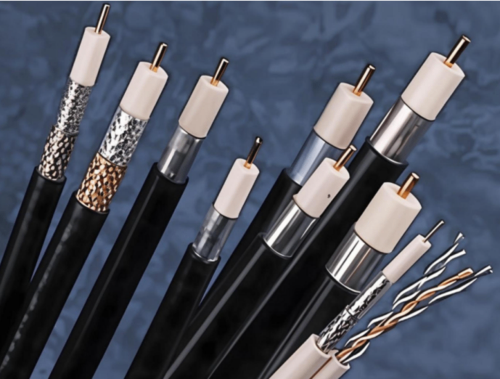
Coaxial cable is a type of wire and signal transmission line that can be used for the transmission of analog and digital signals, and is suitable for various applications. At present, some domestic enterprises have successfully adapted their RF coaxial cable technology to AI servers and demonstrated high penetration rates in the military industry.
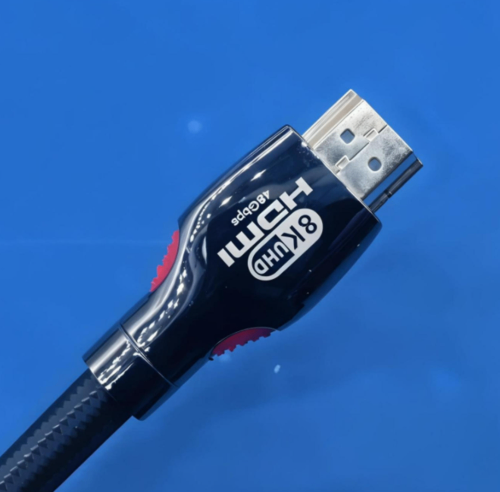
It is reported that since 2019, HDMI 2.1 has been the standard configuration for 8K ultra high definition TVs, and the best 4K TVs also extensively use HDMI 2.1 interfaces. At present, the annual sales volume of HDMI cables in China is 500 million, with a production value of about 50 billion yuan.
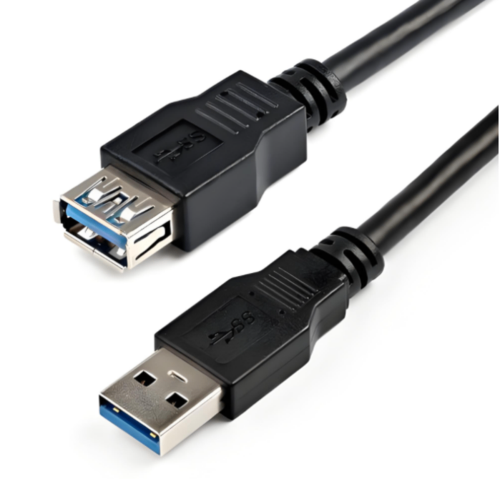
USB can be regarded as the most successful data interface in global development. In the future, when USB 3.2 and even USB 4 become mainstream interfaces, the era of "one interface goes global" is likely to come, which will also drive the demand for high-speed copper wires with better performance.
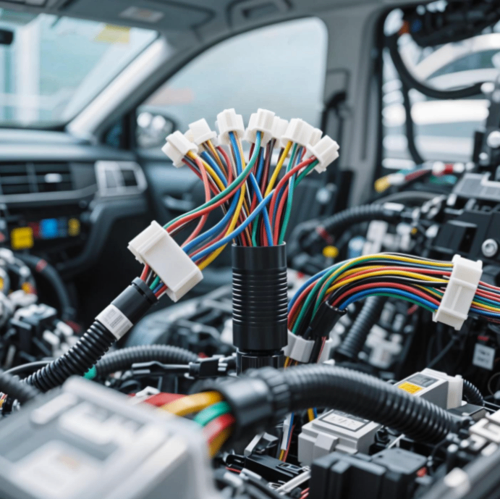
With the transformation of global energy structure and the increasing awareness of environmental protection, the new energy vehicle industry is flourishing, and autonomous driving technology, as an important direction for the future development of automobiles, has also received much attention. As a key component for transmitting data in the autonomous driving system of new energy vehicles, the performance of high-speed wiring harnesses directly affects the safety, reliability, and intelligence level of the vehicle. The China Association of Automobile Manufacturers recently released data on China's automobile industry for the first half of 2025. Data shows that from January to June 2025, China's production and sales of new energy vehicles reached 6.968 million and 6.937 million respectively, an increase of 41.4% and 40.3% year-on-year. The rapid growth of new energy vehicles means that the demand for high-speed wiring harnesses is increasing day by day.
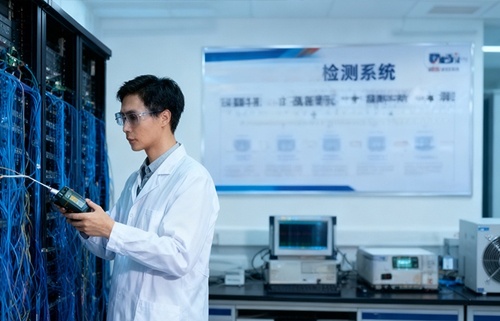
According to expert reports, based on the current development of high-speed copper cable technology, single channel 56G and 112G cables are relatively mature, and the switch from 112G to 224G may be completed this year or next year. The testing frequency points have also been increased from the original 12.89GHz and 16GHz to 26.56GHz, 53.12GHz, and even up to 85GHz. And 448G may be realized in two years.
Foreign countries started early in the field of high-speed wire harnesses, with relatively mature technology, and have formed a group of internationally competitive enterprises, such as Taike Electronics and Anbofu Rosenberg and others. These enterprises have advanced technology and rich experience in high-speed data transmission, electromagnetic compatibility, high temperature resistance, and vibration resistance. In recent years, some domestic enterprises and research institutions have also begun to layout in the field of high-speed wire harnesses and have made certain progress. However, there is still a certain gap with the advanced level of foreign countries in high-speed data transmission, which is a key breakthrough for domestic enterprises in the future.
In summary, the demand from the two important fields of communication and automotive is supporting the rapid development of the high-speed copper wire industry, and its segmented application areas can also be described as diverse. The pioneering layout of overseas enterprises has also made the domestic industry development "traceable" and "legal". However, although the high-speed copper cable market is large, multiple barriers such as technology, patents, supply chain, and customer certification limit the entry of new enterprises. At present, only a few enterprises (such as Amphenol, Luxshare Precision, Wall Nuclear Materials, Anlan Wanjin, Zhaolong Interconnect, etc.) have mass production capabilities, and some domestic enterprises are gradually entering this field through investment and expansion. Therefore, although this field has promising prospects, industry enterprises still need to act within their capabilities.











 Record Number:鲁ICP备2022038891号-2