Recently, at an investor relations event, Zhongji Innolight responded to recent market rumors questioning CSP customers and industry demand.
Zhongji Innight stated that the company currently sees strong industry demand and has not observed any downward revisions in demand guidance from major customers. Higher-bandwidth optical connectivity products will emerge in 202-2028, and the industry's technological trend continues to accelerate. The industry's demand for computing power and bandwidth is real and will be reflected in the orders revenue, and performance of optical module manufacturers.
Additionally, regarding rumors that the company is intentionally suppressing its stock price, Zhongji Innolight emphasized that there is no intentional suppression the stock price or revenue delays, nor will it deliberately adjust its performance. The company consistently values its capital market image and the protection of investor interests, and such rumors are a misunderstanding of the company.
1. 1.6T demand expectations have not decreased, while 800G demand has significantly increased.
hongji Innolight revealed that the company's current backlog of orders covers the entire year of 2026, with some orders extending into 2027 Some customers have already provided quarterly shipment expectations for 2027, indicating high certainty in demand guidance. Overall, the market demand for 1.6T has not shrunk on the contrary, the demand for 800G has increased significantly compared to previous expectations.
Specifically, CSPs, NewCloud, and AI large model companies all have for 800G and 1.6T. Some use self-developed ASIC chips, while others use GPU chips, all of which require optical interconnect solutions. At the stage, the focus is mainly on 800G and 1.6T, with demand growth expected to be very strong in 2027, and the 16T demand expectation has not decreased.
However, Zhongji Innolight also stated that while some customers have indeed lowered their demand, new cloud service providers and AI large model have simultaneously increased their 1.6T demand. The company has entered the supply chains of these new customers and secured definite market shares. Overall, 1.6T demand has declined, but rather undergone a structural adjustment.
Meanwhile, domestic demand for AI data centers is also growing rapidly. Some domestic customers are currently tendering or will further clarify their demand the second half of the year. Currently, domestic demand looks very promising, concentrated on 800G and 400G. Both domestic and overseas markets are facing shortages and delivery gap pressures.
Regarding the pricing of optical module products, Zhongji Innolight explained that prices for 2027 are currently being finalized, and market of price cuts are highly exaggerated. In reality, there are currently few manufacturers capable of large-scale delivery of 1.6T and 800G due to technical, market access, and yield rates, and the actual delivery volumes obtained by customers are not large. The industry will still face tight delivery in
Material shortages are being significantly alleviated and showing marginal improvement.
Regarding supply chain issues, Innolight stated that due to the large demand base and very rapid growth rate, overall materials for optical modules, including optical chips, electrical chips, PCBs, etc., are experiencing varying degrees of tightness, a shortage that has been evident. Currently, a gap still exists between orders and deliveries.
As an optical module manufacturer with high demand, Innolight pushed its suppliers to expand capacity early on, long-term agreements and prepayments to boost their willingness to expand, thereby locking in long-term and newly added capacity. Meanwhile, the company is actively introducing new suppliers and the material supply situation continues to improve. The company has already observed the expansion of supplier capacity and an increase in supply volume, and expects the material shortage to be alleviated to varying degrees with improvement from the second half of this year to the first half of next year.
Regarding whether the equipment and instruments required for upstream production can match the production pace, Innolight that equipment procurement for the company's current capacity expansion is proceeding normally, with no perceived lead time extensions or bottlenecks causing smooth expansion to be hindered. Overall, the lead times for module equipment are relatively short, which is also why the company has been able to expand capacity rapidly over the past two years.
In addition, Innolight expects its released to exceed its shipment volume, maintaining a certain redundancy to ensure it can accommodate orders from more new customers or temporary demand increases from existing customers. Currently, customer demand is growing rapidly quarteron-quarter, and delivery volume is also expected to show a quarter-on-quarter increase. The company is confident in continuing to maintain quarter-on-quarter growth in its performance the second half of this year.
NPO has entered the full process from development and testing to certification.
NPO has shown a clear accelerating trend since March this year, many customers showing strong interest in NPO technical solutions. The company is actively communicating and exchanging ideas, hoping to develop NPO products for customers in scale-up scenarios. Some customers clearly provided demand guidance for 2027-2028, and while some have not yet released guidance, they have clearly identified NPO as an important internal technical. The company is currently conducting customized development based on customer needs and has entered the full process from development and testing to certification.
Regarding the evolution of traditional pluggable solutions, Zhong Innolight introduced that 3.2T is in the R&D stage. The company has already demonstrated the 4*400G solution at this year' OFC, and the 8*400G solution is also further maturing. The entire 3.2T solution is expected to be mature by 2028
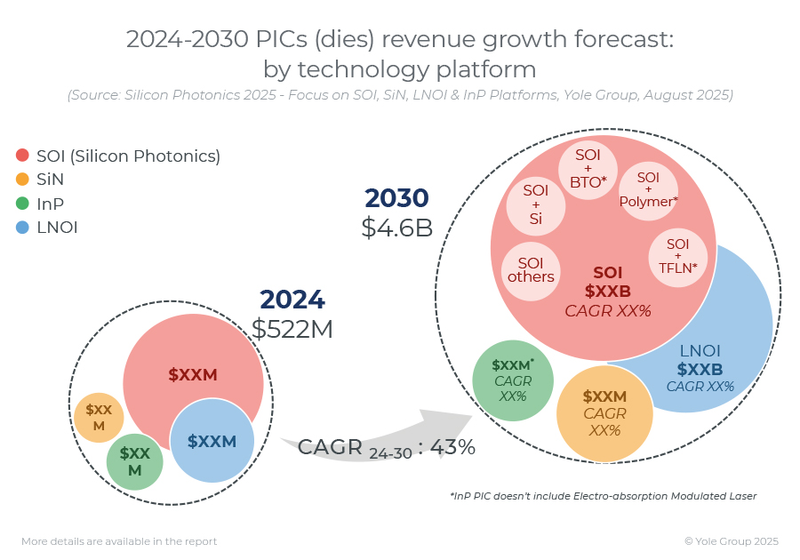
In addition, the overall proportion of silicon photonics solutions continues to maintain an upward trend. Last year it was mainly 800G, and this year some customers are increasing the proportion of silicon photonics for 800G. Furthermore, 1.6T has added some new customers, and the customer structure for 1.6T also see more changes in 2027. New customers are all highly interested in silicon photonics solutions.













 Record Number:鲁ICP备2022038891号-2